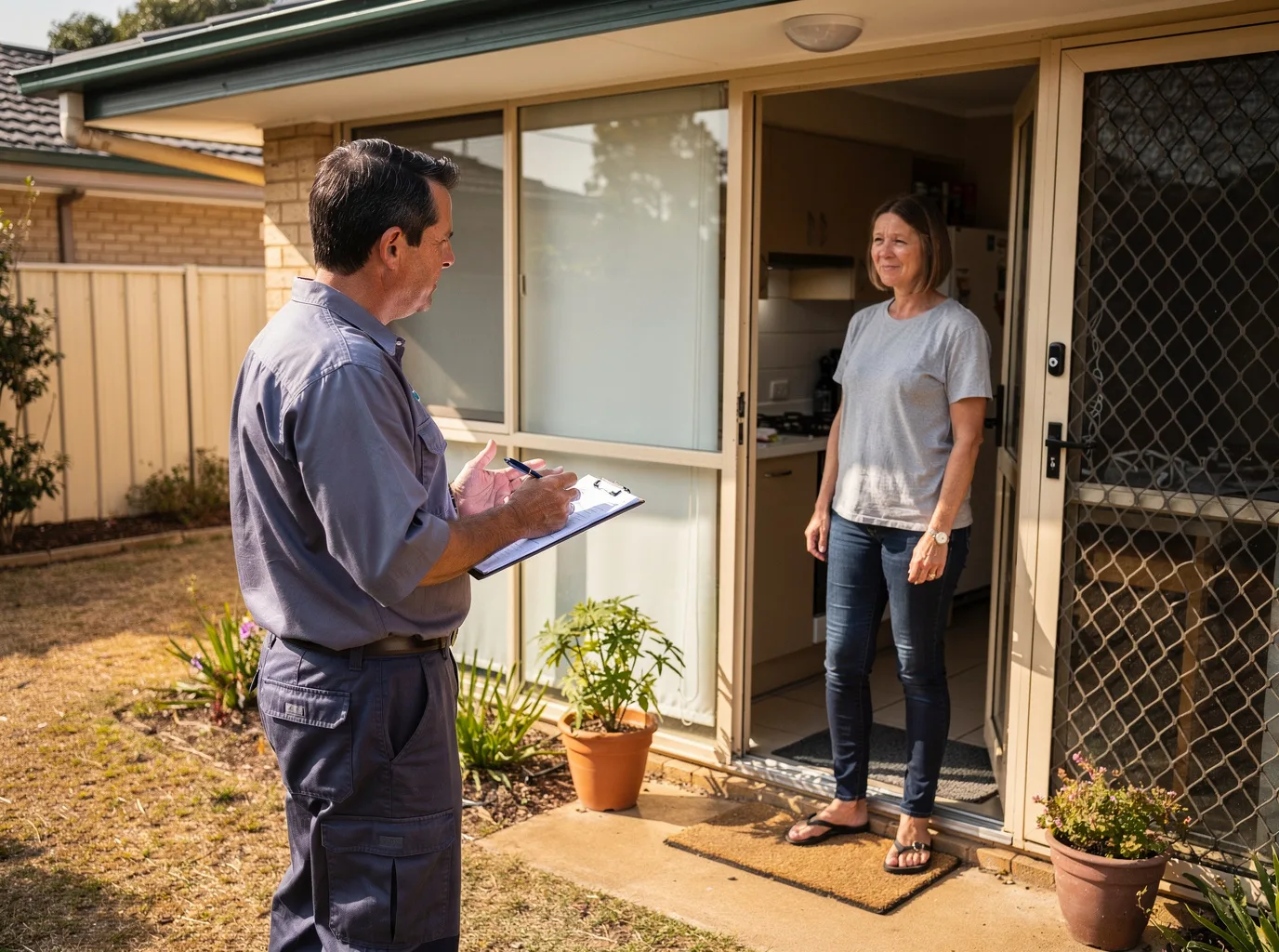
Sealing entry points is usually the last step for a Brisbane home, done once bait or trapping has dealt with the rats already inside. The crew we book walks the outside of the house looking for gaps around eaves, vents, pipes, cabling and old weatherboards, since rats will keep using the same routes if they are left open. A gap that looks small from the ground can be wide enough for a rat once viewed up close, which is why the crew checks each one by hand rather than from a distance.
Not every gap can be closed off entirely. Vents need airflow, so the crew fits mesh covers rather than sealing them shut, while gaps around moving parts like garage doors are treated differently to a static gap in brickwork or timber. The materials used are chosen so rats cannot chew back through them. Weatherproof sealants and metal flashing are used around joins that also need to shed water, so the fix holds up through a Brisbane wet season rather than just the first few weeks.
For older Brisbane homes, this often means checking gaps around stumps, bearers and subfloor access hatches as well as the roofline, since timber homes tend to have more small gaps than a newer brick build. The crew will point out anything that cannot be fully sealed and suggest another way to manage it.
- A walk-around check of eaves, vents, pipes and cabling gaps
- Mesh covers fitted to vents that need to stay open
- Sealing of gaps around stumps, weatherboards and access hatches
- Materials chosen so rats cannot chew back through
- A price for sealing work given before it starts
- Weatherproof materials used around joins exposed to rain and sun
Call 07 3543 7771 once the rats are dealt with, and we will book a local crew to seal the gaps they used.